Braille Unicode Characters: Copy & Paste Blank Braille Patterns ⠀⠁⠂⠃ (BN)
Copy and paste braille Unicode characters instantly. Full list of all 256 braille patterns (U+2800–U+28FF) including the blank braille space ⠀ character.
By Braille Translator Team
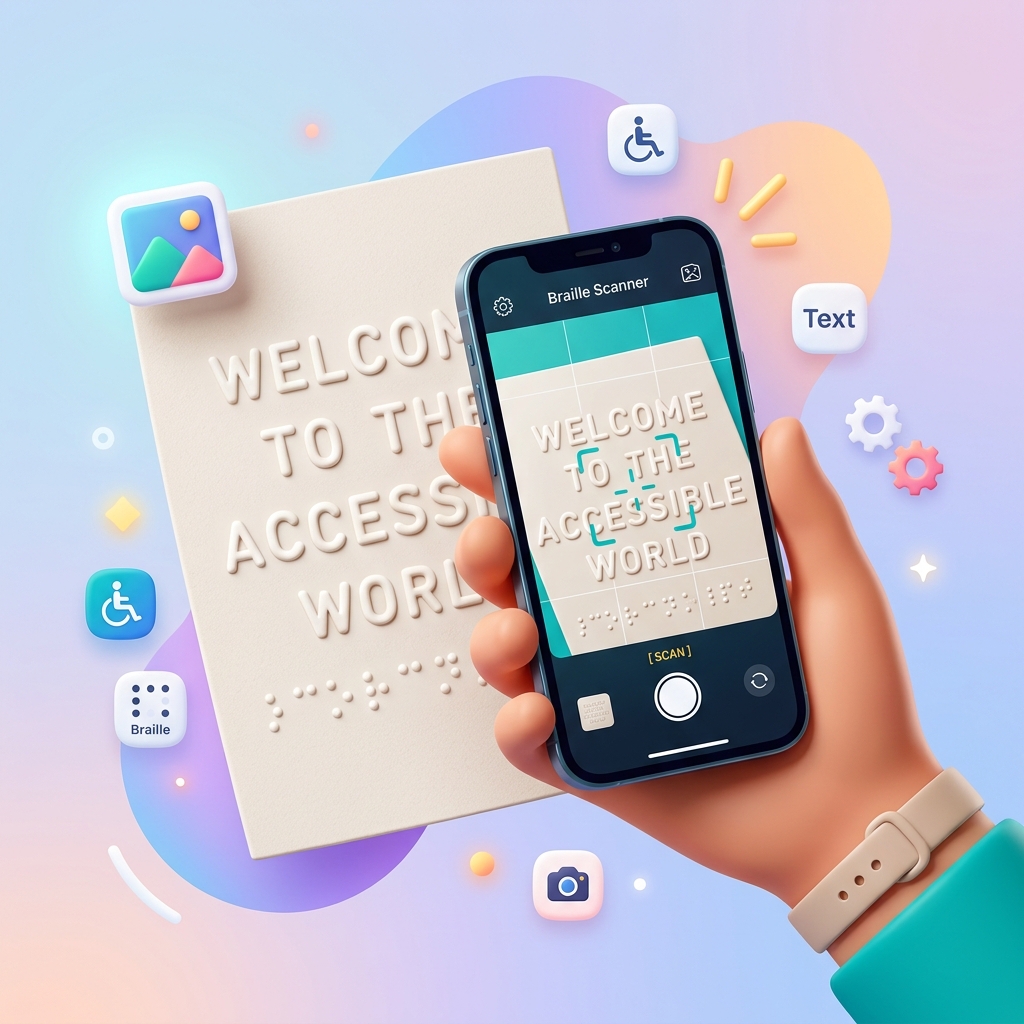
Braille Unicode Characters (BN)
Braille patterns in Unicode occupy the block U+2800 to U+28FF — a total of 256 characters representing every possible combination of 8 dots. These characters display as raised dot patterns in any Unicode-compatible font and can be copied and pasted anywhere: text messages, social media, documents, code, and more.
The most popular braille Unicode character is the blank braille pattern ⠀ (U+2800), which renders as an empty space that many platforms don’t trim — making it useful for invisible text formatting.
⠀ Blank Braille Pattern (Copy & Paste) (BN)
Click to copy the blank braille space character:
⠀
Unicode: U+2800 | Name: BRAILLE PATTERN BLANK | HTML: ⠀
Why People Use the Blank Braille Character (BN)
The blank braille pattern ⠀ looks like a space but is technically a visible character (not whitespace). This means:
- Social media: Platforms that trim regular spaces don’t trim ⠀, so you can create blank-looking usernames, posts, or messages
- Formatting: Create vertical spacing in platforms that collapse multiple line breaks
- Gaming: Make invisible or near-invisible display names
- Programming: Use as a non-breaking space alternative in certain contexts
How to Type the Blank Braille Character (BN)
| Method | How |
|---|---|
| Copy from above | Select ⠀ and paste |
| Windows | Alt + 10240 (numpad) |
| HTML | ⠀ or ⠀ |
| JavaScript | \u2800 |
| Python | \u2800 |
| CSS | \2800 |
Complete Braille Unicode Table (BN)
6-Dot Patterns (U+2800–U+283F) — Standard Braille (BN)
These are the standard 6-dot braille patterns used in literary braille:
| Char | Unicode | Dots | Char | Unicode | Dots |
|---|---|---|---|---|---|
| ⠀ | U+2800 | (blank) | ⠠ | U+2820 | 6 |
| ⠁ | U+2801 | 1 | ⠡ | U+2821 | 1-6 |
| ⠂ | U+2802 | 2 | ⠢ | U+2822 | 2-6 |
| ⠃ | U+2803 | 1-2 | ⠣ | U+2823 | 1-2-6 |
| ⠄ | U+2804 | 3 | ⠤ | U+2824 | 3-6 |
| ⠅ | U+2805 | 1-3 | ⠥ | U+2825 | 1-3-6 |
| ⠆ | U+2806 | 2-3 | ⠦ | U+2826 | 2-3-6 |
| ⠇ | U+2807 | 1-2-3 | ⠧ | U+2827 | 1-2-3-6 |
| ⠈ | U+2808 | 4 | ⠨ | U+2828 | 4-6 |
| ⠉ | U+2809 | 1-4 | ⠩ | U+2829 | 1-4-6 |
| ⠊ | U+280A | 2-4 | ⠪ | U+282A | 2-4-6 |
| ⠋ | U+280B | 1-2-4 | ⠫ | U+282B | 1-2-4-6 |
| ⠌ | U+280C | 3-4 | ⠬ | U+282C | 3-4-6 |
| ⠍ | U+280D | 1-3-4 | ⠭ | U+282D | 1-3-4-6 |
| ⠎ | U+280E | 2-3-4 | ⠮ | U+282E | 2-3-4-6 |
| ⠏ | U+280F | 1-2-3-4 | ⠯ | U+282F | 1-2-3-4-6 |
| ⠐ | U+2810 | 5 | ⠰ | U+2830 | 5-6 |
| ⠑ | U+2811 | 1-5 | ⠱ | U+2831 | 1-5-6 |
| ⠒ | U+2812 | 2-5 | ⠲ | U+2832 | 2-5-6 |
| ⠓ | U+2813 | 1-2-5 | ⠳ | U+2833 | 1-2-5-6 |
| ⠔ | U+2814 | 3-5 | ⠴ | U+2834 | 3-5-6 |
| ⠕ | U+2815 | 1-3-5 | ⠵ | U+2835 | 1-3-5-6 |
| ⠖ | U+2816 | 2-3-5 | ⠶ | U+2836 | 2-3-5-6 |
| ⠗ | U+2817 | 1-2-3-5 | ⠷ | U+2837 | 1-2-3-5-6 |
| ⠘ | U+2818 | 4-5 | ⠸ | U+2838 | 4-5-6 |
| ⠙ | U+2819 | 1-4-5 | ⠹ | U+2839 | 1-4-5-6 |
| ⠚ | U+281A | 2-4-5 | ⠺ | U+283A | 2-4-5-6 |
| ⠛ | U+281B | 1-2-4-5 | ⠻ | U+283B | 1-2-4-5-6 |
| ⠜ | U+281C | 3-4-5 | ⠼ | U+283C | 3-4-5-6 |
| ⠝ | U+281D | 1-3-4-5 | ⠽ | U+283D | 1-3-4-5-6 |
| ⠞ | U+281E | 2-3-4-5 | ⠾ | U+283E | 2-3-4-5-6 |
| ⠟ | U+281F | 1-2-3-4-5 | ⠿ | U+283F | 1-2-3-4-5-6 |
8-Dot Patterns (U+2840–U+28FF) — Extended Braille (BN)
8-dot braille adds dots 7 and 8 below the standard 6-dot cell, creating 192 additional patterns (U+2840–U+28FF). These are used in computer braille and specialized applications.
| Char | Unicode | Dots | Char | Unicode | Dots |
|---|---|---|---|---|---|
| ⡀ | U+2840 | 7 | ⣀ | U+28C0 | 7-8 |
| ⡁ | U+2841 | 1-7 | ⣁ | U+28C1 | 1-7-8 |
| ⡂ | U+2842 | 2-7 | ⣂ | U+28C2 | 2-7-8 |
| ⡃ | U+2843 | 1-2-7 | ⣃ | U+28C3 | 1-2-7-8 |
| ⢀ | U+2880 | 8 | ⣿ | U+28FF | 1-2-3-4-5-6-7-8 |
The full block ⣿ (U+28FF, all 8 dots raised) is often used in text art and terminal graphics.
Braille Alphabet in Unicode (BN)
Quick reference for the standard A–Z braille characters:
| Letter | Braille | Unicode | Letter | Braille | Unicode |
|---|---|---|---|---|---|
| A | ⠁ | U+2801 | N | ⠝ | U+281D |
| B | ⠃ | U+2803 | O | ⠕ | U+2815 |
| C | ⠉ | U+2809 | P | ⠏ | U+280F |
| D | ⠙ | U+2819 | Q | ⠟ | U+281F |
| E | ⠑ | U+2811 | R | ⠗ | U+2817 |
| F | ⠋ | U+280B | S | ⠎ | U+280E |
| G | ⠛ | U+281B | T | ⠞ | U+281E |
| H | ⠓ | U+2813 | U | ⠥ | U+2825 |
| I | ⠊ | U+280A | V | ⠧ | U+2827 |
| J | ⠚ | U+281A | W | ⠺ | U+283A |
| K | ⠅ | U+2805 | X | ⠭ | U+282D |
| L | ⠇ | U+2807 | Y | ⠽ | U+283D |
| M | ⠍ | U+280D | Z | ⠵ | U+2835 |
Convert any text to braille Unicode instantly with our Braille Translator.
How to Use Braille Unicode Characters (BN)
Copy and Paste (BN)
Simply select any braille character from the tables above and paste it wherever you need it. All modern systems support braille Unicode.
In Programming (BN)
// JavaScript
const brailleA = '\u2801'; // ⠁
const blank = '\u2800';    // ⠀

# Python
braille_a = '\u2801'  # ⠁
blank = '\u2800'       # ⠀
In HTML (BN)
⠁ <!-- ⠁ (braille A) -->
⠀ <!-- ⠀ (blank braille) -->
⠁ <!-- ⠁ (decimal) -->Generate Braille Unicode Text (BN)
Use our free tools to generate braille Unicode:
- Braille Translator — convert any text to braille Unicode characters
- Text to Braille — detailed converter with Grade 1 & 2 support
- Braille to Text — reverse: paste braille Unicode and get English text back
Frequently Asked Questions (BN)
What is the blank braille Unicode character? (BN)
It’s U+2800 (⠀), the braille pattern with no dots raised. It renders as an invisible character that platforms treat as a visible character rather than whitespace.
How many braille Unicode characters are there? (BN)
There are 256 braille Unicode characters (U+2800–U+28FF), covering all possible combinations of the 8-dot braille cell.
Can I copy and paste braille characters? (BN)
Yes. Braille Unicode characters work everywhere that supports Unicode — browsers, social media, text editors, code, messaging apps, and more.
What’s the difference between 6-dot and 8-dot braille? (BN)
Standard literary braille uses 6 dots (64 patterns). Computer braille uses 8 dots (256 patterns) to represent all ASCII characters in a single cell.